forum
library
tutorial
contact

'Real consequences': Washington Congresswoman
Questions Bonneville for Ending Salmon Hatchery Funds
by Michaela Bourgeois
KOIN 6 News, July 15, 2026
|
the film forum library tutorial contact |
|
'Real consequences': Washington Congresswoman
by Michaela Bourgeois
|
Pulled funding could place seven million hatchery fish in production at risk
and hatchery jobs in Southwest Washington could also be in jeopardy
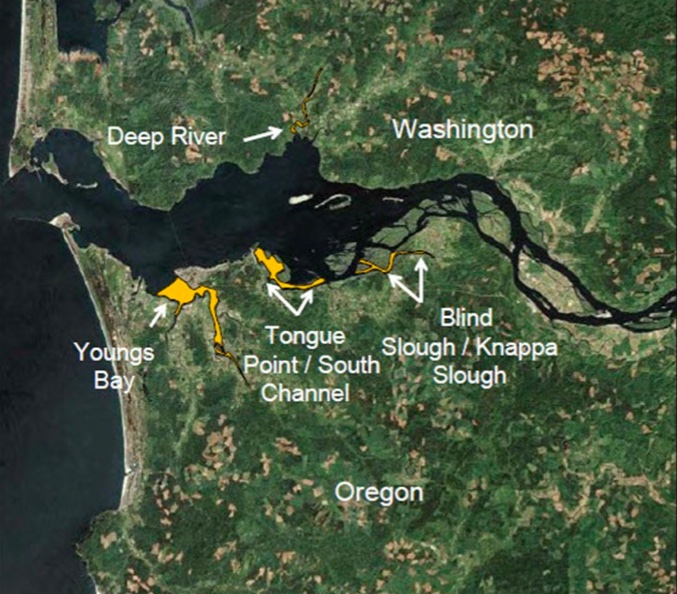 PORTLAND, Ore. (KOIN) -- Washington Congresswoman Marie Gluesenkamp Perez is questioning the Bonneville Power Administration after the agency decided to stop funding a Columbia River hatchery program.
On July 7, the congresswoman sent a letter to BPA Administrator Travis Kavulla, requesting more information about the decision to stop funding the Select Area Fisheries Enhancement (SAFE) program after supporting the program for over 30 years.
Since the program began in 1993, the SAFE program has created commercial and sport fishing opportunities in off-stem areas of the Columbia River, the congresswoman's office explained.
"This is a decision with real consequences," Representative Gluesenkamp Perez said in a statement. "For decades, hatcheries have made sure there is a healthy population of salmon in the river. This isn't abstract to people here -- commercial and sport fishing is part of our heritage and our way of life. Supporting hatcheries is critical to sustaining the communities whose livelihoods depend on them."
In her letter, Gluesenkamp Perez raised concerns that current estimates show that BPA's termination of funds will impact hatchery operations in Washington State.
She argues that the pulled funding could place seven million hatchery fish in production at risk, noting hatchery jobs in Southwest Washington could also be in jeopardy.
In her letter, Gluesenkamp Perez raised concerns that current estimates show that BPA's termination of funds will impact hatchery operations in Washington State.
She argues that the pulled funding could place seven million hatchery fish in production at risk, noting hatchery jobs in Southwest Washington could also be in jeopardy.
On June 18, the Oregon Department of Fish & Wildlife said the agency learned the BPA is ending its share of funding for the SAFE program.
The end of the estimated $2.4 million in funding could cause major impacts to commercial and recreational fishing, ODFW said.
"This decision by BPA caught us by surprise," said ODFW Director Debbie Colbert. "It puts decades of fishery reform work at risk and goes against the recommendation of the regional fish and wildlife managers and the Northwest Power and Conservation Council to fund this work."
ODFW wasn't the only agency that was caught off guard by the cut funding.
In a statement shared with KOIN 6 News, a spokesperson for the Washington State Department of Fish & Wildlife said, "WDFW was surprised by Bonneville Power Administration's decision to withdraw funding for the Select Area Fisheries Enhancement (SAFE) Program in the lower Columbia River. SAFE has played a critical role in providing fishing opportunities, supporting fishing communities, and advancing fishery management strategies designed to protect vulnerable salmon and steelhead stocks."
Without these funds, ODFW says more than 7 million hatchery salmon currently in production are facing immediate risk. The lack of funding also creates an estimated $2.4 million funding gap for three agencies responsible for SAFE: ODFW, Washington Department of Fish and Wildlife and Clatsop County.
The Bonneville Power Administration will end its share of the funding on September 30. Amid this three-month notice, ODFW is warning of "far-reaching impacts" for commercial and recreational fishing.
This includes major disruptions for commercial and recreational fisheries that rely on SAFE hatchery fish releases to provide a predictable and sustainable harvest.
In 2025, landings in Oregon's SAFE commercial fisheries led to nearly $6 million in economic impacts to fishing communities regionally, ODFW said, noting, on average, about 34% of fish harvested from SAFE are taken home by anglers in the ocean and lower Columbia River.
The lost funding will also strain state and county partners, who have no replacement funding for the program, according to ODFW.
BPA sent a letter to ODFW on June 18 announcing the end of the funds. In the letter, Executive Director for BPA's Fish and Wildlife Program Jason Sweet, outlined the admin's reasons for withdrawing the funds.
According to Sweet, the SAFE program -- which began as a pilot project -- is not benefiting the salmon or steelhead stocks.
"In the beginning, BPA supported this experimental objective because of the hypothesized enhancement benefit for fish stocks that are affected by the federal hydropower system during their migrations through the mainstem of the Columbia River. However, in the intervening years, implementation of the SAFE program ultimately has not demonstrated an ability to deliver this theoretical benefit, and the program's value as a hydropower mitigation tool has therefore been in question for some time," the letter stated.
"Although the off-channel fisheries supported by the SAFE program have clearly increased commercial and recreational harvest opportunities in those areas, there is no direct evidence that such increased off-channel harvest has resulted in reduced harvest impacts on weak and ESA listed stocks in the mixed-stock fisheries on the mainstem," the letter continued.
In the letter, BPA noted that the current goals of the SAFE program are primarily focused on addressing "lost fishing opportunities" and focus less on minimizing negative impacts on fish stocks. This is among the reasons BPA claims the program does not align with the administration's goals.
Sweet's letter noted that the BPA previously advised ODFW to become less reliant on BPA funds.
"Because of this misalignment, BPA has consistently advised the region to plan for a transition away from dependence on BPA's cost-share funding for the SAFE program. Since at least 2011, there has been an expectation that the SAFE program should eventually become self-sustaining through funds other than BPA's. Unfortunately, if anything, the SAFE program is now more reliant on BPA funding as Washington began to phase out its participation starting in 2024," the letter continues.
"BPA recognizes that the Northwest Power and Conservation Council's most recent project review recommended the SAFE program for ongoing funding," the letter notes. "However, a Council recommendation is not a funding guarantee, and the reasons outlined above explain why BPA has nonetheless determined that continued cost-share funding of the SAFE program is not a good fit for BPA's Fish and Wildlife Program."
Since receiving the revoked funding notice, ODFW and WDFW said they are working together, along with Clatsop County, to assess further impacts of the lost funding.
Related Pages:
Loss of Columbia River SAFE Gillnet Fishing Program Would Ripple Far and Wide by Peter Roscoe, Daily Astorian, 7/20/26
Javadi, Sherman and More Weigh in on BPA Funding Cuts by Jay Corella, Seaside Signal, 7/13/26
Oregon Lawmakers Call Out Bonneville Power Administration's Sudden Cut in Hatchery Funding by Haley Jones, Seafood Source, 7/13/26
Oregon Coast Lawmakers Push Back on Fish Hatchery Cuts by Bryce Dole, Oregon Public Broadcasting, 7/7/26
Decades-Old Salmon Enhancement Program Faces Uncertain Future After BPA Exit by Michael Williams, Columbia Community Connection, 7/7/26
BPA Abruptly Pulls Funding from Columbia River Fisheries Program by Kendra Chamberlain, Columbia Insight, 6/26/26
Oregon Officials Decry Loss of Funding for Fish Hatcheries After BPA Announces End of Support by Haley Jones, Seafood Source, 6/25/26
BPA Won't Help Fund Lower Columbia's SAFE Salmon Programs After Saying It Would by Andy Walgamott, Northwest Sportsman, 6/16/26
Oregon Fisheries Face 'Major Consequences' After Bonneville Pulls Funding: ODFW by Michaela Bourgeois, KOIN, 6/22/26
learn more on topics covered in the film
see the video
read the script
learn the songs
discussion forum