forum
library
tutorial
contact
Javadi, Sherman and More
Weigh in on BPA Funding Cuts
by Jay Corella
Seaside Signal, July 13, 2026
|
the film forum library tutorial contact |
|
Javadi, Sherman and More
by Jay Corella
|
In the 33 years since the program's inception, it has not resulted in evidence of a
reduced impact on the Endangered Species Act-listed fish in the main stem of the river
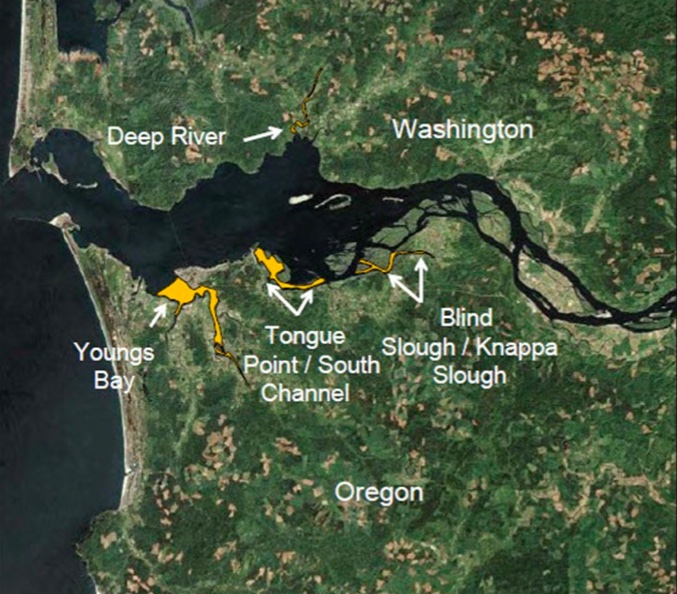 Following an announcement on June 18 that the Bonneville Power Administration will cut funding to the Select Area Fisheries Enhancement program (SAFE) in the lower Columbia River, a number of voices have spoken out against the decision, including political leaders and candidates, as well as officials from the Oregon Department of Fish and Wildlife and other organizations across the county and state. The cuts are set to leave a $2.4 million funding gap starting on Sept. 30.
Oregon Rep. Cyrus Javadi, who represents the North Coast, released an official statement about the proposed funding cuts on Monday.
"This may sound like one more fight over a government program with a long name," Rep. Javadi said. "But for people who live and work along the Lower Columbia, it is much simpler than that. It is about whether there are fish to catch, jobs to work, and paychecks to bring home."Javadi, who switched parties in September 2025, is running for reelection in November as a Democrat.... The commercial fishery produces roughly $5 million a year in value paid directly to fishermen at the dock, before counting the work created for processors, restaurants, hotels, marinas, fuel docks, boat builders, mechanics, and other local businesses.
"People sometimes talk about the fishing economy as though it begins and ends with the person holding the rod or standing on the boat," Javadi said. "It does not. When the fish disappear, the effects travel quickly. The deckhand loses hours. The processor handles less product. The restaurant buys less seafood. The marina sells less fuel. The hotel has fewer guests.
"There is a basic principle here," Javadi said. "When federal decisions impose costs on local communities, the federal government should not simply hand those costs back to the people who had the least say in creating them."
Members of the bipartisan Oregon Coastal Caucus are working with fishery partners, state agencies, the Governor's Office, and Oregon's federal delegation to urge BPA to reconsider its decision. Javadi said the focus should remain on the people whose lives depend on the fishery.
"No government program should be immune from scrutiny," Javadi said. "But ending a program that has supported fisheries, protected weaker wild stocks, and sustained coastal jobs for decades is not reform merely because someone found a line to cut in a budget."
In a statement emailed to The Astorian on Monday, Max Sherman, the Republican candidate vying for Javadi's seat, agreed with Javadi about the BPA cuts.
Sherman also said in a phone call that the decision to only give about four months of lead time before the cuts went into effect was "short sighted.""I strongly oppose the Bonneville Power Administration's decision to terminate funding for the (SAFE) Program. The abrupt nature of this decision provides virtually no time for fisheries managers, local governments, or the fishing industry to respond, placing commercial and recreational fisheries that depend on sustainable salmon returns at immediate risk.
"The SAFE Program is vital to the North Coast economy. Commercial fishermen, charter operators, guides, recreational anglers, seafood processors, marine suppliers, and countless small businesses all depend on healthy salmon fisheries. The economic impact extends well beyond those who fish. Visitors who come to Oregon to fish support our hotels, restaurants, fuel stations, and local businesses, generating important revenue for our coastal communities.
"This decision also places more than seven million hatchery salmon already in production at risk and creates uncertainty for the hatcheries and staff responsible for raising those fish. It threatens decades of collaborative work that has supported fishing opportunities while helping protect vulnerable wild salmon populations.
"I respectfully urge the Bonneville Power Administration to restore SAFE Program funding while working with the Oregon Department of Fish and Wildlife, local communities, and industry partners to develop a long-term, sustainable funding strategy. Decisions with such significant economic and environmental consequences deserve thoughtful collaboration -- not abrupt funding cuts that jeopardize the livelihoods of North Coast families and the future of one of Oregon's most important natural resource industries."
On July 6 in Washington D.C., several Oregon congresspeople and senators released a joint press release and open letter to newly-appointed BPA Administrator Travis Kavulla calling for BPA to honor its commitment to funding SAFE.
Senators Jeff Merkley and Ron Wyden were joined by Representatives Suzanne Bonamici, Andrea Salinas, Janelle Bynum, Val Hoyle, and Maxine Dexter.
"When BPA shared its intent to terminate the SAFE program with its non-federal sponsors, the agency provided its partners with less than four months to accommodate for the loss of this critical stream of funding. However, work to produce next year's stock of hatchery fish has already begun," wrote the lawmakers.
"We urge BPA to reconsider its decision to walk back on its partnership with regional stakeholders to support fish mitigation activities through the SAFE program. Without strong collective action, communication, and trust, the hardworking stakeholders in the region won't be able to overcome challenges of diminishing salmon populations and energy security. Further, walking back on the SAFE program stands in opposition to the President's Executive Order 14276 on Restoring American Seafood Competitiveness. We encourage BPA to fulfill its obligations, and renew its contracts with ODFW, WDFW, and Clatsop County to provide certainty in critical fish stocks in our region."
Read the full text of the Oregon Congressional Delegation's letter on Senator Merkley's website.
From ODFW
"Without BPA funding the future of the SAFE Program and the commercial fishers who rely on them, is highly uncertain," said ODFW public information officer Megan Dugan. "If funding is not restored, it would likely mean the end of these important fisheries."
The SAFE program is a collaborative fisheries program in the lower Columbia that supports the salmon harvest in designated areas and reduces impacts on the wild, threatened or endangered salmon stocks, according to Jennifer Benoit, a Clatsop County public affairs officer. The project is managed by Oregon and Washington Departments of Fish and Wildlife and Clatsop County's fisheries program. However, a portion of funding is provided by the Bonneville Power Administration.
"The program began in 1993 as an experimental pilot program with the conservation focus goal to reduce the impacts of the recreational and commercial harvest on the main stem of the Columbia River," said BPA spokesperson Maryam Habibi.
Habibi said that in the 33 years since the program's inception, it has not resulted in evidence of a reduced impact on the Endangered Species Act-listed fish in the main stem of the river.
Related Sites:
Legal Settlement Reached to Protect Wild Salmon and Steelhead from Harm by Lower Columbia River Hatcheries Wild Fish Conservancy, 10/4/24
learn more on topics covered in the film
see the video
read the script
learn the songs
discussion forum