forum
library
tutorial
contact
California Sea Lions Learned to "Wait for Dinner"
Outside a Hydroelectric Dam
by Emile Perreira
The Pulse, August 2, 2026
|
the film forum library tutorial contact |
|
California Sea Lions Learned to "Wait for Dinner"
by Emile Perreira
|
The dam was originally designed to allow salmon and steelhead to navigate past it.
California sea lions eventually learned to follow the same schedule as the fish they hunted
 The California sea lions did not use a map to locate the fish at Bonneville Dam.
All they had to do was learn when "dinner" would show up.
Each year, millions of adult salmon and steelhead migrated upstream past the dam into their natal spawning habitats. Hundreds of California sea lions also appeared in the same general area.
Sea lions returned season after season.
Eventually, wildlife officials realized the area below the dam provided reliable food. What developed was an unusual challenge for wildlife managers.
The same structures built to help fish migrate upstream had become feeding grounds for California sea lions.
A bottleneck that concentrated thousands of fish
Bonneville Dam on the Columbia River is the structure that concentrates so many fish. Every year, millions of adult salmon and steelhead make their way upstream past the dam into their spawning habitats.
As fish approach dams and fish ladders, they concentrate in relatively small areas. Those areas of concentration provide an abundance of prey for various predator species.
Such concentrations can transform ordinary migration routes into feeding opportunities. Bonneville Dam became one of the most visible examples of this effect.
Dams, fish ladders, and natural pinch points can become hotspots for predation throughout the river system.
Eventually, the issue began attracting attention across the region. Endangered salmon and steelhead now face another threat from sea lions feeding at those hotspots.
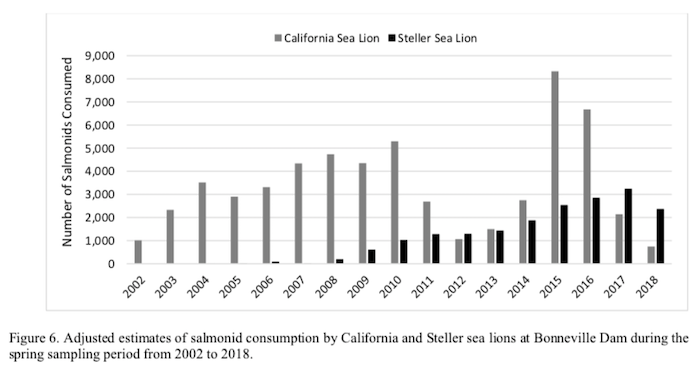
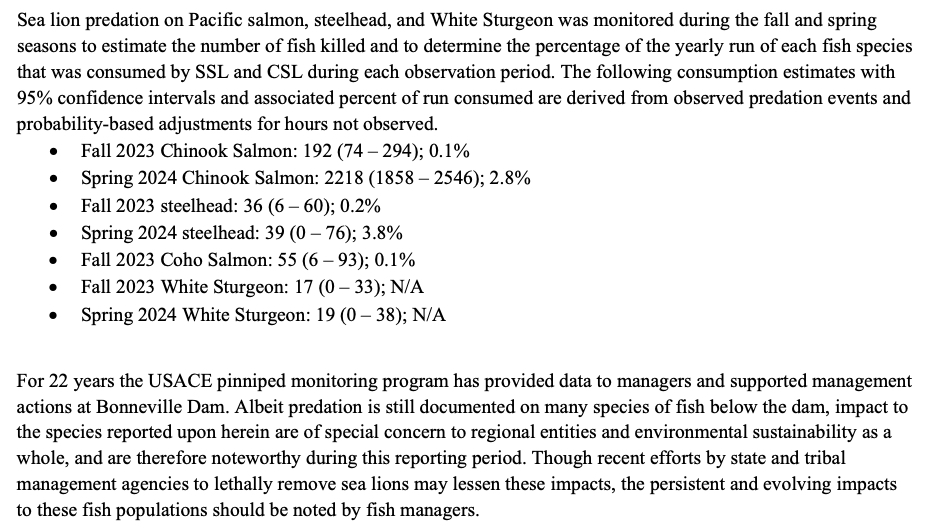
Since monitoring began in the early 2000s, sea lions have consumed large numbers of salmon and steelhead at Bonneville Dam.
The issue has attracted growing concern among wildlife managers.
Rather than roaming the river, these predators return to an area that consistently produces food.
More than a conflict between predators and prey
These California sea lions did not accidentally stumble upon Bonneville Dam. They continued returning to Bonneville Dam because the area consistently provided hunting opportunities.
Many salmon and steelhead pass through the same area below the dam each migration season, creating a predictable hunting opportunity.
Field observations from the Washington Department of Fish and Wildlife helped document this recurring behavior.
The International Marine Animal Trainers' Association has also highlighted the challenge of managing sea lions that repeatedly return to the same feeding locations.
Wildlife managers spent years trying to discourage California sea lions from congregating near Bonneville Dam. Unfortunately, hazing proved difficult because many sea lions repeatedly returned to the same predation sites.
A feeding opportunity they learned to recognize
Salmon and steelhead returned to Bonneville Dam each year during their upstream migrations.
Millions of salmon and steelhead pass through a few select locations while moving through the river system.
Those recurring movements eventually attracted attention from unexpected observers.
How did the sea lions learn to "wait for dinner"?
The Washington Department of Fish and Wildlife identifies dams and fish ladders as predation hotspots. These hotspots include dams, fish ladders, and other natural pinch points.
Bonneville Dam represents one of those specific predation hotspots. Each year, migrating salmon and steelhead congregate at the same locations around Bonneville Dam.
The California sea lions then learned to associate those locations with the arrival of their food supply.
Instead of searching the river for food, they can return to a location that consistently produces it.
Unfortunately, years of hazing efforts failed to significantly reduce predation at Bonneville Dam. Many sea lions continued returning to the same feeding locations year after year.
The dam was originally designed to allow salmon and steelhead to navigate past it.
Some California sea lions eventually learned to follow the same schedule as the fish they hunted.
Similar fish-passage projects are exploring ways to restore migration routes in other dam-altered rivers.
Related Pages:
California Sea Lions Learned to "Wait for Dinner" Outside a Hydroelectric Dam that was Quietly Releasing Salmon and Steelhead by Anumita Kaur, New Hampshire Union Leader, 7/25/26
Feds Greenlight Killing More Sea Lions to Protect
Endangered Salmon as Controversy Fades by Henry Brannan, Washington State Standard, 9/15/25
Sea Lion Removals Continue as Agencies Seek to Extend Permit by K.C. Mehaffey, NW Fishletter, 5/14/25
Sea Lions Threaten Salmon Runs as Removal Efforts at Bonneville Dam Face Funding Limits by Staff, KATU, 3/25/25
Bonneville Sea Lion Removal Operations Ongoing, Just 2 Culled by Andy Walgamott, Northwest Sportsman, 4/28/23
Battle Over Endangered Fish has Led Oregon to Cull Sea Lions by Staff, KGW, 4/11/23
Report: Sea Lion Abundance Drops, But 'Sustained Impacts' to Fish Remain by K.C. Mehaffey, NW Fishletter, 3/13/22
Sea Lions Threaten Northwest's Salmon by Lauren Ellenbecker, The Columbian, 2/17/22
Sea Lions, Seals Might be Hampering WA Salmon Recovery. What Can Be Done? by Isabella Breda, Seattle Times, 1/15/23
Report Raises Question of Hunting Seals to Save Washington Salmon by Timothy Schumann, The Center Square, 12/19/22
Scientists: Let's Test Removing Salmon-eating Seals, Sea Lions by Don Jenkins, Capital Press, 11/23/22
NMFS Authorizes Sea Lion Removals to Save Columbia River Salmon by Lynda Mapes, National Fisherman, 8/27/20
Hundreds of Sea Lions to be Killed on Columbia River in Effort to Save Endangered Fish by Lynda Mapes, Seattle Times, 8/15/20
Criteria for Killing Salmon-eating Sea Lions Reduced at Bonneville Dam on Columbia by Keith Ridler, Statesman Journal, 5/3/19
ESA Winter Steelhead Impacted by Prolonged Steller Sea Lion Presence at Bonneville Dam by Staff, Columbia Basin Bulletin, 2/1/19
So Far, Sea Lions at Bonneville Dam Below 10-Year by K.C. Mehaffey, NW Fishletter, 5/14/25
Sea Lions Threaten Salmon Runs as Removal Efforts at Bonneville Dam Face Funding Limits by Staff, KATU, 3/25/25
Bonneville Sea Lion Removal Operations Ongoing, Just 2 Culled by Andy Walgamott, Northwest Sportsman, 4/28/23
Report: Sea Lion Abundance Drops, But 'Sustained Impacts' to Fish Remain by K.C. Mehaffey, NW Fishletter, 3/13/22
Sea Lions, Seals Might be Hampering WA Salmon Recovery. What Can Be Done? by Isabella Breda, Seattle Times, 1/15/23
Scientists: Let's Test Removing Salmon-eating Seals, Sea Lions by Don Jenkins, Capital Press, 11/23/22
NMFS Authorizes Sea Lion Removals to Save Columbia River Salmon by Lynda Mapes, National Fisherman, 8/27/20
Hundreds of Sea Lions to be Killed on Columbia River in Effort to Save Endangered Fish by Lynda Mapes, Seattle Times, 8/15/20
Criteria for Killing Salmon-eating Sea Lions Reduced at Bonneville Dam on Columbia by Keith Ridler, Statesman Journal, 5/3/19
ESA Winter Steelhead Impacted by Prolonged Steller Sea Lion Presence at Bonneville Dam by Staff, Columbia Basin Bulletin, 2/1/19
Senate Passes Bill Making it Easier to Kill Sea Lions on Pacific Northwest River by Phuong Le, KSL.com, 12/8/18
Hunters Demand Quota to Cull Thousands of Seals to Save Salmon Population Along B.C.'s Coast by Jenny Peng, Star Vancouver, 8/2/18
Northwest Tribes may Soon Have Right to Kill Sea Lions by Katy Sword, The Columbian, 8/1/18
One State's Plan to Save a Protected Species is to Kill Another Species by Karin Brulliard, The Dalles Chronicle, 6/11/18
Latest Bi-Weekly Pinniped Report Shows Decline in Steller, California Sea Lions at Bonneville Dam by Staff, Columbia Basin Bulletin, 6/1/18
learn more on topics covered in the film
see the video
read the script
learn the songs
discussion forum