forum
library
tutorial
contact

Will Wild Salmon
Pay the Price for AI?
by Editorial Board
Daily Astorian, October 22, 2025
|
the film forum library tutorial contact |
|
Will Wild Salmon
by Editorial Board
|
 The only thing most folks need to know about salmon is how long to cook a filet. But here on the Columbia where sport fishing is a huge deal and many still count on commercial boats for a few weeks of delicious meals, a person could spend decades trying to unravel the details of salmon science, litigation and politics.
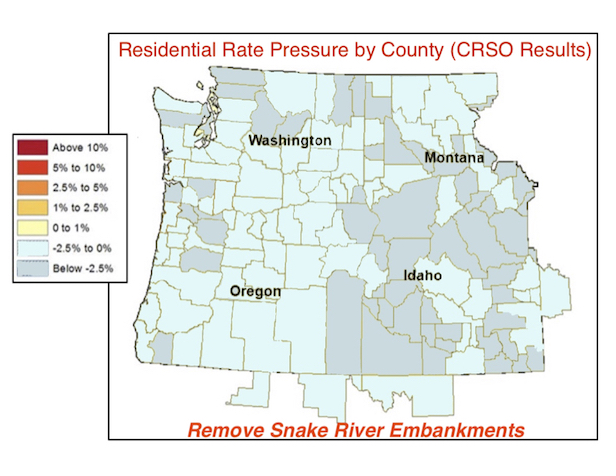
Dams -- especially the four relatively late additions on the Columbia's largest tributary, the Snake -- have been Public Enemy Number 1 for many at this far western end of watershed. There are those on the river, particularly members of the Columbia River Inter-Triibal Fish Commission, who would like them gone to protect 13 wild-spawning salmon and steelhead populations that return to the Columbia Basin from the Pacific Ocean.
Even here in our salmon-centric estuary communities, however, there is some ambivalence about removing or bypassing the Snake dams at this late stage, when relatively clean hydropower helps keep greenhouse gases out of the atmosphere. And the farther you go upriver, the more dam defenders you will find. (It's important here to remember that struggling wild salmon and relatively thriving hatchery salmon are different populations. For example, through Oct. 20, this season's late run of coho -- 93% hatchery fish -- is the largest to date in the last 10 years.)
The Trump administration, with no compunctions about blowing up agreements, is not at all inclined to blow up dams. Its officials little understand or care about the delicate balancing act of salmon recovery. As well explained in this Washington State Standard article, tinyurl.com/Dams-Salmon, the administration has reneged on an agreement hammered out under the Biden administration in 2023 that aimed to finally resolve litigation dating from 2001.
The previous federal government didn't agree to this legal settlement out of the goodness of its heart. It was aimed at satisfying international and Indian treaty obligations and requirements of the Endangered Species Act to avoid salmon and orca extinctions. Canceling it now doesn't make those obligations disappear. Nor are salmon advocates likely to agree to reopen negotiations -- Trump appointees shouldn't expect to be trusted after ditching a long-fought compromise.
The new litigation seeks judicial oversight of the four Lower Snake dams and the four western Columbia dams, including Bonneville. Such an injunction isn't like the complex legal fight that got us here. There's a good chance the judge will order the steps demanded by the tribes and other litigants, though it could be blocked or stalled by appeals.
"Conservation groups and other plaintiffs want to see reservoir levels lowered and more water poured over spillways at the dams, starting in March 2026. ... [and] other emergency conservation measures, including removing passage barriers for spring Chinook in the Tucannon River and increasing federal efforts to control predators that feed on salmon and steelhead," according to the Standard's reporting.
These are complicated times and the groups that supported canceling the Biden administration's settlement aren't irrational. There is much demand for power, with the Northwest grid under strain -- though it must be noted that corporate data centers and profits are a large factor in this fight.
Should salmon, tribes and orcas pay the price for artificial intelligence speculation? For many, the answer is no.
learn more on topics covered in the film
see the video
read the script
learn the songs
discussion forum