forum
library
tutorial
contact

What Happens to Mountain West
Economies after Dams are Removed?
by Kaleb Roedel
Aspen Public Radio, June 18, 2026
|
the film forum library tutorial contact |
|
What Happens to Mountain West
by Kaleb Roedel
|
A new study is challenging one of the most persistent arguments against removing aging dams:
that nearby communities will suffer economically if the structures come down.
 Researchers with Headwaters Economics analyzed 24 dam removals across the United States to see what happened to local economies afterward. Their findings suggest communities generally continued along similar economic paths after dam removal, with little evidence of long-term economic decline.
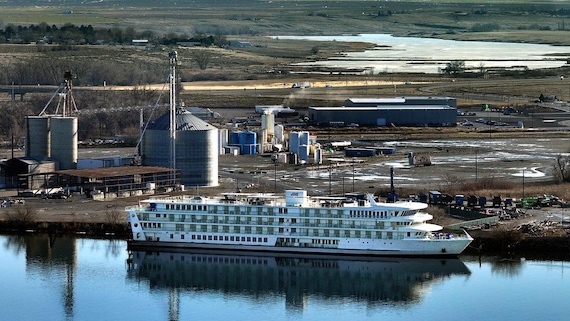
The research comes as debate continues over the future of four dams on the Lower Snake River near the border of Idaho and Washington state. Supporters of dam removal argue taking out the dams would help restore struggling salmon populations. Opponents say the dams provide hydropower, support agricultural shipping and remain important economic assets.
Megan Lawson, researcher at Headwaters Economics and the study's lead author, said the findings challenge assumptions about how much dams drive local economies.
"Our idea of where our jobs come from, where the income comes from, is based in sometimes history, sometimes mythology, identity, and doesn't necessarily reflect where economies are today," Lawson said.
The researchers examined economic indicators before and after dam removals, looking for signs of disruption. The study included projects ranging from small structures to larger removals, including the Cucharas No. 5 Dam in southern Colorado.
Lawson said the analysis found that sectors directly tied to dams often represent a relatively small share of local employment.
"The sectors that do depend on the dams make up only about less than 10% of local jobs," she said. "They are not the largest or fastest-growing."
Instead, the study found many communities were driven by industries such as local government, healthcare, manufacturing, and other service-sector jobs.
Researchers found that whatever economic trajectory communities were on before a dam was removed generally continued afterward.
"There really wasn't a big disruption at all," Lawson said. "Sort of whatever was happening before continued to happen after the dams were removed."
The report also points to potential opportunities that can emerge when rivers are restored, though the authors note those benefits were not fully quantified in the analysis.
Lawson said free-flowing rivers can attract recreation, tourism and new business activity.
"Tourists bring valuable dollars into especially remote rural communities and can support businesses and entrepreneurship," she said.
The study's authors caution that every dam-removal project is unique. They also note that communities facing major infrastructure transitions, such as dam removals, often benefit from planning and public investment to help workers and local businesses adapt.
Still, Lawson said the broader lesson extends beyond dam removal.
Across the West, communities are grappling with questions about aging infrastructure, energy transitions and changing economic conditions. She said policymakers should focus on understanding what drives local economies today rather than relying on assumptions rooted in the past.
Related Sites:
The local economic implications of Lower Snake River dam removal by Headwater Economics, 2026
learn more on topics covered in the film
see the video
read the script
learn the songs
discussion forum