forum
library
tutorial
contact
Warm Water Temperatures
Stall Fall Chinook Run
by Eric Barker
Lewiston Tribune, September 7, 2025
|
the film forum library tutorial contact |
|
Warm Water Temperatures
by Eric Barker
|
Wild Fall Chinook that make it back to the Snake River
upstream of Lower Granite Dam could dip below 5,040 adult fish
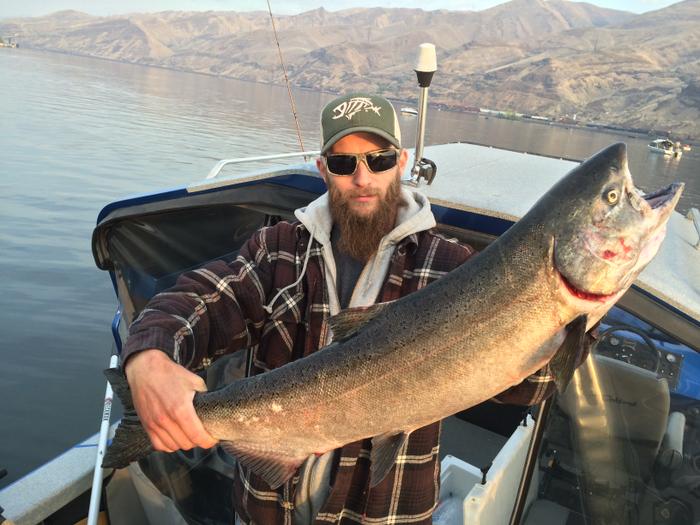 Elevated water temperatures in the Columbia and Snake rivers have slowed the progression of the fall chinook run and may necessitate regulation changes, according to fisheries officials in Idaho and Washington.
Chris Donley, fish program manager for the Washington Department of Fish and Wildlife at Spokane, said river temperatures are "exceptionally high" and slowing movement of the fish between dams.
"Typically the longer it takes for those things to convert from Bonneville and Lower Granite, the fewer of them make it, which will probably curtail the number of unmarked chinook we can allow in our fisheries."
Unmarked chinook are those that have intact adipose fins indicating they may be wild fish. Wild Snake River fall chinook are protected as threatened under the Endangered Species Act. Under current regulations, both states allow anglers to keep fall chinook even if they have intact adipose fins and may be wild. But those regulations are based on wild fish returning at a rate high enough to ensure enough of them will reach spawning grounds.
Joe DuPont, regional fisheries manager for the Idaho Department of Fish and Game at Lewiston, said in an emailed update on the run Friday that regulation changes could come later this month.
He wrote if survival of fall chinook between Bonneville and Lower Granite dams falls below 50%, the number of wild fall chinook that make it back to the Snake River upstream of Lower Granite Dam could dip below 5,040 adult fish -- a threshold that might trigger restrictions that forbid the harvest of fish with intact adipose fins.
"Our goal will be to make this closure at a time when enough impact remains to keep a harvest fishery open for fish with a clipped adipose fin and still incorporate the catch-and-release mortality that will occur on wild fish," he wrote and added fisheries managers would aim to give anglers a minimum of three day's notice before making a change.
Donley said this summer started with below-average snowpacks in the mountains that feed the Columbia River and was followed by drought.
"We had 45 days that we anticipated rainfall in the mountains that didn't happen," he said. "Less rainfall means less water which means warmer overall water temperatures in the basin."
Higher water temperatures can be lethal to cold-water species. They can also cause migrating fish to stall and wait for temperatures to recede.
Donley said while the fish wait, they are more vulnerable to harvest in tribal and nontribal fisheries in the Columbia River.
"A whole lot of them will get caught and that changes how many show up here," he said. "There are a lot of people down there fishing for them -- of all varieties -- it's not to be blamed on any one group."
He also said when fish that are hung up downriver start to move, they are likely to pass through the confluence of the Snake and Clearwater rivers quicker than usual, which will depress catch rates in the popular fishery.
learn more on topics covered in the film
see the video
read the script
learn the songs
discussion forum