forum
library
tutorial
contact

Behind-the-Scenes Talk of Bringing the
'God Squad' to the Columbia Basin
by K.C. Mehaffey
NW Fishletter, June 2, 2026
|
the film forum library tutorial contact |
|
Behind-the-Scenes Talk of Bringing the
by K.C. Mehaffey
|
 It should come as no surprise that some of the parties involved in litigation over Columbia River System Operations (CRSO) have recently discussed the potential of using the so-called "God Squad" to resolve long-standing issues over how to operate federal dams in the lower Snake and Columbia rivers.
It's unclear how serious those discussions have been, but everyone involved in the decades-long lawsuit that I contacted, including several who declined to speak on the record, had heard the rumor that it was under discussion.
It's also unclear whether anyone in the Trump administration has actually advocated for an Endangered Species Act (ESA) exemption for hydropower generation in the Columbia Basin, where there are 13 threatened or endangered species.
It's possible that the rumors were mere speculation arising from the administration's March 31 decision to grant an ESA exemption for oil and gas exploration and development in the Gulf of Mexico. That was around the time the "rumors" started about the God Squad being conveyed, according to several people that I spoke with.
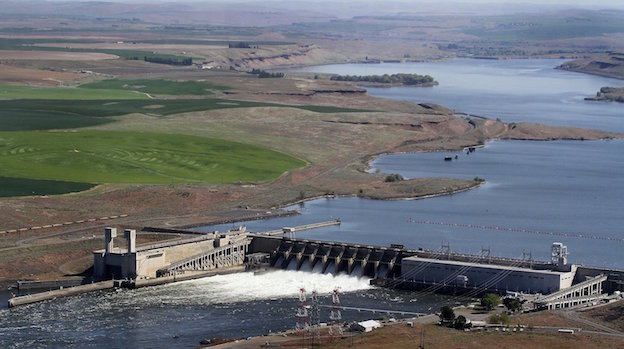
What is clear to me is that tensions are high right now, as a court-ordered preliminary injunction is forcing higher spill at federal dams in the Columbia Basin and several parties -- including the federal government -- have appealed the order in the 9th U.S. Circuit Court of Appeals.
What's at stake depends on your perspective.
Salmon managers are worried about the hot, dry summer ahead and the early similarities of this water year with 2015, when about 250,000 adult sockeye died in the lower Columbia River. They're also concerned about a multitude of other threats to salmon right now.
Public-power advocates, meanwhile, are concerned that there won't be enough electricity to meet this summer's air-conditioning demands, and that rising costs for power in the Northwest will continue to outpace the rest of the country.
The God Squad, officially called the Endangered Species Committee, has the power to effectively decide that other matters -- like generating electricity -- are important enough to risk extinction of threatened or endangered species.
Calling together the Endangered Species Committee is rare. According to Democratic senators who have called for an investigation into the Gulf of Mexico decision, "It was the first meeting of the God Squad since 1992."
Neil Maunu, executive director of the Pacific Northwest Waterways Association, said he heard rumors from other stakeholder groups a few months ago, and he wasn't sure if it was just people talking, or a real possibility.
"We haven't even wanted to open that Pandora's box to see what that looks like," he told me, adding, "The Inland Ports and Navigation Group is very focused on this appeal. That's where our efforts and focal point is now -- preparing for that -- and again, we're optimistic that our filings, along with the U.S. government's and other intervenors, can make a very strong case about where [U.S. District] Judge [Michael] Simon went wrong."
Amanda Goodin, senior attorney for Earthjustice which represents the plaintiffs, said she also heard the rumor. "I really hope it's just a rumor, and not something that comes to fruition," she said, adding, "It would be an outrageous abuse of the statutes, and a betrayal of our obligations to [Native American] tribes."
Darryll Olsen, board representative of the Columbia-Snake River Irrigators Association (CSRIA), said over the past three months, he's had three or four inquiries from people asking him about the God Squad.
He notes that mitigation would still be required even with an ESA exemption.
Olsen is well versed in what it takes to invoke the Endangered Species Committee. He attempted to do just that nearly a decade ago. The materials from that effort are still on the CSRIA website.
At the time, Olsen thought invoking the God Squad would put a halt to the litigation (Clearing Up No. 1839).
He doesn't think it would now, though.
In early May, Olsen asked CSRIA's lawyer to dig into the legal ramifications of a God Squad exemption for the Federal Columbia River Power System, given treaty promises that the U.S. government made with several tribes in the Northwest -- dating back to 1854 and 1855 -- known as the Stevens Treaties.
In those treaties, Isaac Stevens, who was governor of the Washington Territory, assured tribes they would continue to be able to access fisheries in their usual and accustomed places.
In a legal memorandum, CSRIA attorney James Buchal wrote that "the power of these Treaties has been waxing for decades and could easily extend to federal judicial declarations that grant equitable relief even beyond the scope of Judge Simon's recent preliminary injunction. This relief could be granted based solely on the Treaties, without regard to the Endangered Species Act (ESA), and therefore could not be stopped by the God Squad."
Buchal points to multiple decisions by the 9th Circuit and U.S. Supreme Court that uphold not only the rights of tribes to harvest half of the salmon available, but also prevent state and federal governments from taking actions that reduce the supply of fish.
"The Tribes are not going anywhere, and winning the present litigation before U.S. Federal District Judge Simon (or invoking the God Squad to defeat the ESA claims) will not stop ongoing litigation," Buchal concluded.
Any decision to convene the Endangered Species Committee to protect the FCRPS would likely have to wait until after the appeals court decides whether to uphold the preliminary injunction. It certainly appears that -- with or without the God Squad -- those involved in litigation over Columbia Basin hydropower operations still have a long road ahead, and that there continues to be no easy answers to managing salmon populations in the lower Snake and Columbia rivers.
MEMORANDUMTo: Dr. Darryll Olsen, Board Representative, Columbia Snake River Irrigators Association
From: James L. Buchal
Date: May 4, 2026
Re: Stevens Treaties
You have asked me to opine on whether and to what extent the current litigation strategy of the federal agencies and some industry groups, perhaps even supplemented by a God Squad exemption, could deflect the demands of the Stevens Treaties upon the Federal Columbia River Power System (FCRPS). The short answer is that the power of these Treaties has been waxing for decades and could easily extend to federal judicial declarations that grant equitable relief even beyond the scope of Judge Simon's recent preliminary injunction. This relief could be granted based solely on the Treaties, without regard to the Endangered Species Act (ESA), and therefore could not be stopped by the God Squad. By contrast, the prior long-term settlement agreement process, negotiated and signed in late 2023, seemed likely to re-channel Treaty-based demands.
Stevens Treaty Rights Will Likely Impose
In general, Indian treaties are to be interpreted as the Indians would have understood them, with ambiguities are resolved in favor of the tribes. The Ninth Circuit has declared:
Substantive Rights to Recover Salmon."[Washington Territory] Governor Isaac Stevens and other negotiators assured the Tribes of their continued access to their usual fisheries. Governor Stevens assured the Tribes that even after they ceded huge quantities of land, they would still be able to feed themselves and their families forever. As Governor Stevens stated, "I want that you shall not have simply food and drink now but that you may have them forever."United States v. Washington, 853 F.3d 946, 961 (9th Cir. 2017) (emphasis added), aff'd, 584 U.S. 837 (2018). Over time, notwithstanding the limited language of the Treaty, statements such as these have been invoked to give the Tribes a substantive right to have fish present -- or at least to prevent the United States and others from taking action that reduces the supply of fish.The U.S. Supreme Court's initial interpretation of the Treaties held that the Tribes have "a right, secured by treaty, to take a fair share of the available fish." Washington v. Washington State Commercial Passenger Fishing Vessel Ass'n, 443 U.S. 658, 684-85 (1979). By 1983, in an opinion that was later vacated, a Ninth Circuit panel had declared that the right to take fish necessarily includes the right to have those fish protected from man-made despoliation, so that the treaties impose upon the State a corresponding duty to refrain from degrading or authorizing the degradation of the fish habitat to an extent that would deprive the treaty Indians of their moderate living needs. United States v. Washington, 759 F.2d 1353, 1355 (9th Cir. 1985). Most recently, Tribes sought an injunction against the State of Washington from constructing and maintaining culverts under State roads that degraded fish habitat, and the Ninth Circuit upheld a district court injunction requiring the State to replace or upgrade hundreds of culverts. See United States v. Washington, 853 F.3d at 970-71. Federal judges can thus easily interpret the Stevens Treaties to impose a substantive obligation to avoid reducing salmon supplies, based on easily made findings that the asserted needs of the Tribes for salmon are not being met.
Only a Clear Congressional Decision to Abrogate
Ordinary treaties and statutes have equal dignity under the Supremacy Clause, so a later statute can override an earlier treaty under the "last-in-time"" rule if there is an irreconcilable conflict. That is not true of tribal treaties. The special judicial solicitude for such treaties has created the rule that treaties will trump the statute unless there is "clear evidence that Congress actually considered the conflict between its intended action on the one hand and Indian treaty rights on the other, and chose to resolve that conflict by abrogating the treaty". United States v. Dion, 476 U.S. 734, 640 (1986). The best evidence is, of course, "that Congress make 'express declaration' of its intent to abrogate treaty rights," but it may not be required "where the evidence of congressional intent to abrogate is sufficiently compelling . . .". Id. at 739. In particular, "clear and reliable evidence in the legislative history of a statute" that Congress knew the statute would result in a treaty breach, and determined to abrogate the treaty -- even without expressly declaring so -- may be sufficient. Id.
Stevens Treaty Rights Can Dismiss Their Authority.It is very clear that general authorizations to build or operate dams will not be held to abrogate treaty rights. As far back as 1977, the United States District Court for the District of Oregon declared that the U.S. Army Corps of Engineers could not build a Congressionally-authorized dam on Catherine Creek where "Congress authorized this project in 1965 without knowing that the dam would affect [Stevens Treaty] rights". Confederated Tribes of Umatilla Indian Reservation v. Alexander, 440 F. Supp. 553, 555 (D. Or. 1977).
Conventional Litigation Defenses to
Ordinary doctrines available in private litigation that would bar injunctive relief in favor of the Tribes long after dams have been built and operated (particularly laches, the equitable equivalent of a statute of limitations) cannot prevent the federal judiciary from granting such relief as is proven to its satisfaction to meet Tribal needs for salmon. It is well established that the "United States cannot, based on laches or estoppel, diminish or render unenforceable otherwise valid Indian treaty rights". United States v. Washington, 853 F.3d at 967.
Stevens Treaty Claims Will Not WorkThe United States may be expected to respond to Stevens Treaty claims by saying that it has not waived its sovereign immunity against treaty-based claims for injunctive relief. Indeed, the grant of jurisdiction to the U.S. Court of Federal Claims over "any claim against the United States accruing after August 13, 1946, in favor of any tribe" (28 U.S.C. § 1505) has generally been construed to allow only claims for money damages. However, the Administrative Procedure Act (APA) provides a general waiver of sovereign immunity allowing claims "seeking relief other than money damages" (5 U.S.C. § 702) and allows courts to issue a "mandatory injunction" (id. § 703) and "to compel agency action unlawfully withheld or unreasonably delayed" (id. § 706). It is easy to imagine Ninth Circuit judges finding continued operation of the dams unlawful by reason of Treaty violations, as the Tribes recreate the same sort of litigation that has been underway for decades with the Endangered Species Act.
The God Squad Is No Solution to Treaty-Based Claims.
To date the Tribes have not directly invoked the Stevens Treaties as a basis for challenge to federal operation of the FCRPS, though they have found their way into the litigation. For example, in the most recent opinion granting the preliminary injunction, Judge Simon recited "a promise that 'the number of fish would always be sufficient to provide a 'moderate living' to the Tribes" (Doc. No. 2667, at 36), using the "upholding [of] this promise of these treaties [a]s a vital public interest" supporting the injunction (id. at 37).All that the God Squad could accomplish is to provide an administrative exemption pursuant to which agency plans for operation of the FCRPS would be deemed in compliance with the ESA -- if a God Squad ruling were even achieved that survived judicial review. A successful God Squad exemption would thus remove all ESA-claims from the ongoing litigation. It would not remove the National Environmental Policy Act (NEPA) claims. However, equitable relief available under NEPA is unlikely to extend beyond remedies securing further environmental analysis.
That is not the case for Tribal claims based on the Stevens Treaties, where the whole point of the relief would be to force the federal government to take affirmative action to produce more fish and reach recovery standards such as those acknowledged by the Northwest Power and Conservation Council. The God Squad exemption is in some sense entirely irrelevant to Treaty-based claims; Congress has not authorized the Executive Branch to abrogate Indian treaties in this or any other fashion and indeed only Congress can abrogate Indian treaties.
The Tribes might argue that the God Squad exemption, to the extent it freed federal agencies to operate the dams in a more fish-killing manner, is itself a breach of the Treaties, but the breach arises from the actual dam operations themselves, not the paperwork supporting them. The God Squad decision would merely be among the facts of record assembled by the Tribe to show that the effect of operations was to kill so many fish that there were no longer sufficient fish to meet Tribal needs, making the case for equitable relief against the hydro project operations.
Conclusion
The Tribes are not going anywhere, and winning the present litigation before U.S. Federal District Judge Simon (or invoking the God Squad to defeat the ESA claims) will not stop ongoing litigation. Other regional dam operators in these circumstances, e.g., Tacoma Public Utilities Cushman Dam, have concluded that settlement with the Tribes was the only solution; and perhaps ahead of their time, the Columbia-Snake River Irrigators Association (CSRIA) has sought settlement as well. I speculate that the federal government and others will ultimately come to the same view.
learn more on topics covered in the film
see the video
read the script
learn the songs
discussion forum