forum
library
tutorial
contact
'We are its Voice': Columbia River Must be
Protected After Mill Disaster, Tribes Say
by Gosia Wozniacka
The Oregonian, June 8, 2026
|
the film forum library tutorial contact |
|
'We are its Voice': Columbia River Must be
by Gosia Wozniacka
|
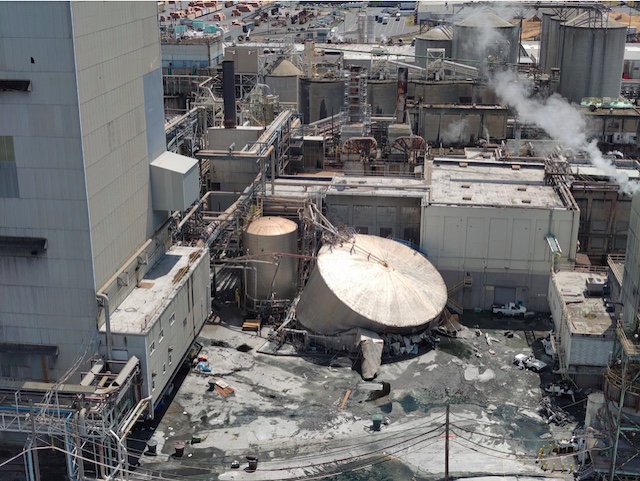
Located on the shore of the Columbia River, the Nippon Dynawave tank implosion
killed 11 workers and released nearly 600,000 gallons of a caustic "white liquor"
 The tribal chairman of the Confederated Tribes of Warm Springs has called for transparency and accountability for any contamination that may have reached the Columbia River in the aftermath of a deadly chemical tank rupture and spill at a Longview paper mill.
The May 26 tank implosion at the Nippon Dynawave mill killed 11 workers and released nearly 600,000 gallons of a caustic chemical known as "white liquor" at the site. The mill is located on the shore of the Columbia River.
An unknown amount of the chemical entered the mill's drainage system, which connects to a network of ditches running through nearby industrial areas and neighborhoods. Emergency crews flushed those ditches into the Columbia River to dilute the contamination and prevent the chemicals from entering the drinking water supply.
Warm Springs Chairman Dennis White III expressed condolences and prayers for the workers who lost their lives and then turned to decisions made during the emergency cleanup.
Those actions could have lasting consequences for the river, its fish and the tribal treaty rights tied to it, he said.
"The long-term protection of natural resources must be considered alongside immediate public safety concerns," White said in a statement. "Contaminated water was directed into the Columbia River -- a living ecosystem that is directly connected to our people, our culture, and our way of life."
In the first day after the tank rupture, state officials said the water in the ditch network had elevated pH levels. The pH measures how acidic or caustic water is.
That same day, Nippon also recorded two pH spikes from its pumps sending the ditch water into the Columbia. But the pumps shut off automatically after the spike detection, said Washington Department of Ecology spokesperson Brittny Goodsell.
Most of the chemicals from the tank stayed on the mill site, Washington regulators later said. Tests showed ditch water discharged into the river later in the week was diluted to safe pH levels, they said.
Goodsell said Ecology Department officials don't know exactly how much contaminated water got flushed into the Columbia initially.
"But due to the volume and speed of the river, we believe the amount in the water would have been diluted approximately within the length of a football field," she said.
The nearly 3,000 fish found dead in the ditch system since last Friday likely occurred during the initial release of chemicals into the ditches, Ecology officials said.
The agency said Thursday that workers have completed flushing water through the ditch system. The decision came after 72 hours of pH testing with no elevated levels, indicating the system is now clear of contamination from the spill, the agency said.
White said tribal people have a duty to speak on behalf of the Columbia River because it provides their livelihood and serves as the basis for their cultural and spiritual traditions. In 1855, a treaty preserved the tribes' right to fish at its usual and accustomed fishing places along the Columbia and its tributaries.
"We are river people. We come from the Big River. Our river is a way of life, and water is life. We have a responsibility to speak for our river -- we are its voice," he said.
Related Pages:
'We are its Voice': Warm Springs Chairman Speaks for Columbia River after Chemical Spill by Candice Stilwell, Columbia County Spotlight, 6/5/26
learn more on topics covered in the film
see the video
read the script
learn the songs
discussion forum