forum
library
tutorial
contact

After 17 Years, Most
Columbia Basin Fish Accords Expire
by K.C. Mehaffey
NW Fishletter, November 5, 2025
|
the film forum library tutorial contact |
|
After 17 Years, Most
by K.C. Mehaffey
|
John Hairston told the Northwest Power and Conservation Council that the accords
have provided significant value, to the extent that they've prevented additional litigation
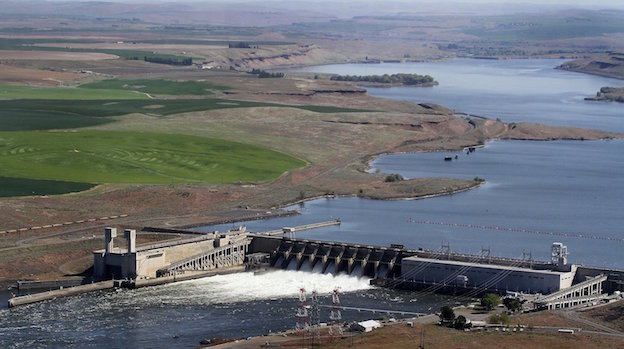 Most of the historic Columbia Basin Fish Accords expired Sept. 30, in what could be another sign of eroding cooperation in the Columbia Basin.
The 17-year-old agreements with three Northwest states and six Native American tribes have funded over $1.3 billion in projects to restore salmon, steelhead and Pacific lamprey in the Columbia Basin.
The seven separate accords were initiated by the Bonneville Power Administration in 2008 to provide dedicated funds over multiple years to salmon restoration, and to prevent at least some parties from taking their issues over fish recovery to court. The U.S. Army Corps of Engineers and the Bureau of Reclamation also signed onto the agreements to help mitigate the effects of the federal hydropower system on fish.
"These agreements have proved to be effective tools for implementing crucial and complex fish and wildlife mitigation projects, and, equally as important, have provided a foundational framework for the parties to improve their relationships, resolve disputes, and innovate novel approaches to fish and wildlife conservation in the Columbia River Basin," according to BPA's description of the accords.
The purpose of keeping states and tribes from suing the federal agencies was reiterated in 2022, when BPA Administrator and CEO John Hairston told the Northwest Power and Conservation Council that the accords have provided significant value, to the extent that they've prevented additional litigation.
The spirit of cooperation appears to be breaking down.
In an Oct. 22 notice filed in U.S. District Court for the District of Oregon by the Confederated Tribes and Bands of the Yakama Nation, the tribe told the court that "in light of changing circumstances," it would participate as a plaintiff-aligned amicus curiae in the lawsuit over Columbia River System Operations.
One of the circumstances is the expiration of the fish accords and "the Bonneville Power Administration's decision not to extend them or negotiate successor agreements."
The State of Washington also recently changed its status in the lawsuit to a plaintiff-aligned amicus curiae, although expiration of the accords was not mentioned.
Initiated in 2008, the original accords guaranteed the states and tribes more than $950 million to fund restoration of salmon, steelhead and Pacific lamprey in the Columbia Basin for 10 years. They were extended in 2018 with an additional $400 million and extended again in 2022.
BPA spokesperson Kevin Wingert said that in recent years, roughly half of the funds that BPA spent on the Columbia Basin Fish and Wildlife Program were through the fish accords.
He told NW Fishletter in an email that the accords have always been part of the Fish and Wildlife Program; they just bundled some of the projects together in groups.
"BPA anticipates that much of the fish and wildlife mitigation that had been funded under Accords will continue as part of BPA's annual implementation of the Fish and Wildlife Program," he said.
Wingert added that the expiration of the accords doesn't necessarily signal a permanent end. "A number of similar agreements are still in place and are scheduled to run into the 2030s, and BPA has continued to express its interest in developing modernized versions of the Accords at an appropriate point in the future," he said.
To: Committee on Natural Resources Republican Members
From: Subcommittee on Oversight and Investigations Staff
Subject: Oversight Hearing titled "Examining Systemic Government Overreach at CEQ"
Date: Thursday, September 14, 2023The Subcommittee on Oversight and Investigations will hold an oversight hearing titled, "Examining Systemic Government Overreach at CEQ" on Thursday, September 14, 2023, at 10:00am EDT in room 1324 Longworth House Office Building.
Member offices are requested to notify Cross Thompson by 4:30 p.m. on September 12, 2023, if their Member intends to participate in the hearing.
I. KEY MESSAGES
President Biden has transformed the once small Council on Environmental Quality (CEQ) staff from their core mission of ensuring compliance with the National Environmental Policy Act of 1969 (NEPA) into a legion of frontline warriors for implementing radical social change and eco-justice initiatives across the federal government.
CEQ's role in implementing executive orders and rulemaking vastly exceeds its statutory role and prescribed authority.
It is imperative for CEQ to abide by the Fiscal Responsibility Act's significant NEPA and permitting reforms -- reforms that will make it faster and easier to build critical infrastructure projects and reduce the burden on taxpayers by creating efficiencies in the permitting process.
The recent NEPA Phase Two Proposed Rulemaking issued by CEQ ignores significant NEPA reforms of the Fiscal Responsibility Act -- specifically those aimed at reducing the scope of NEPA reviews -- and undercuts the White House's agreement with Congress.
CEQ was invited to testify at this hearing but declined to appear. CEQ's willful disregard for Congress and the rule of law impacts all Americans -- from the cost of heating and cooling our homes to small and large businesses, their impact has no bounds. . . .
f. CEQ's involvement in the Lower Snake River Dams
The Lower Snake River Dams in the Columbia River Basin and Washington state were authorized by Congress in 1945 and have the capacity to supply 3,000 megawatts of carbon- free energy. Particularly during periods of high demand, the Lower Snake River Dams help to keep the Pacific Northwest power system reliable, even during emergencies. Additionally, the Lower Snake River Dams play a critical role in reducing transportation emissions. Between 50 and 60 million tons of cargo are transported through barges along the river each year and forty percent of America's wheat transits through the system.
Despite the immense importance of the Lower Snake River Dams, and continuous work to improve fish passage rates, radical eco-activist groups have abused the litigation system for decades in pursuit of dam removal. Simultaneously, the Biden administration has attempted to circumvent Congress by betraying previous federal actions supporting the continued operation of the Lower Snake River Dams and is instead heeding calls for breaching the dams.
Those in favor of breaching the Lower Snake River Dams often fail to recognize, and/or ignore, the value of the Lower Snake River Dams and the cost of replacement. In 2016, the Bonneville Power Administration (BPA) estimated that replacing the dams would increase power costs by $274 million to $372 million per year. Six years later, in 2022, BPA commissioned a study by a San Francisco environmental consulting firm, Energy + Environmental Economics ("E3"), which found that the cost of replacing the output from the Lower Snake River Dams ranges from $415 million to $860 million per year through 2045. Moreover, under assumptions from litigants supporting breaching the Lower Snake River Dams, up to 1.2 terawatts (or 1,200,000 MWh) would depend on technologies not yet readily available, such as hydrogen-fueled combustion turbines.
In 2020, the federal government released a Record of Decision (ROD) on the operations for the Columbia River System, which includes the Lower Snake River Dams. The ROD did not endorse dam breaching, stating that while breaching may benefit "some species of ESA-listed fish, it would achieve those benefits at the expense of not meeting the other components of the agencies' Purpose and Need Statement for certain EIS objectives." Shortly thereafter, Earthjustice, the National Wildlife Federation, and other eco-groups, sued the federal government to challenge the ROD.
Instead of aggressively defending the official position of the federal government, the Biden administration, notably CEQ, has sought to appease the calls to breach the Lower Snake River Dams and has shown favoritism to the plaintiffs in confidential negotiations. In 2021, the federal government, the State of Oregon, the Nez Perce Tribe, and plaintiffs to the litigation filed an agreement with the U.S. District Court that outlined how dam operations would be altered in the coming year while allowing for parties to reach further agreement on long-term operations.
Shortly thereafter, in March 2022, CEQ published a blog outlining a "path forward" for the Columbia River Basin following a consultation between agencies and Tribes of the Columbia River Basin. The blog post specifically supported a policy of breaching the four dams on the lower Snake River, contradicting the 2020 ROD on the operations of the Columbia River Basin system. At the same time, CEQ engaged the Federal Mediation and Conciliation Service (FMCS) to "mediate and facilitate between the parties in the litigation and the regional sovereigns, including Tribal Nations and states." FMCS, on behalf of CEQ, announced public listening sessions for the public.
While the mediation process is confidential, many of the defendants have expressed deep reservations and considerable disappointment regarding the overall mediation process. Of particular concern is the Biden administration's apparent push to forgo trying to reach a "consensus" resolution and instead advance a predetermined outcome of dam removal. At the end of August, the U.S. District Court extended the stay in the long-running litigation to allow the mediation to continue until the end of October. Stakeholders expressed dismay with the mediation process, the Biden administration's favoritism towards the eco-activist plaintiffs, and the role of CEQ.
IV. CONCLUSION
President Biden has transformed CEQ's role from overseeing NEPA compliance to the entity charged with implementing his radical eco-agenda, remaking federal agencies as vehicles of social change, and leading the war on domestic energy production. A bureaucratic morass of various agencies, offices, and councils report to and take directions from CEQ. At the same time, CEQ's role in implementing executive orders and rulemaking vastly exceeds its statutory role and prescribed authority. It is imperative for CEQ to abide by the Fiscal Responsibility Act's significant NEPA and permitting reforms -- reforms that will make it easier to build in America, speed up timelines for critical infrastructure projects, and reduce the burden on taxpayers by creating efficiencies in the permitting process. Sadly, the recent NEPA Phase Two Proposal from CEQ ignores significant NEPA reforms of the Fiscal Responsibility Act, specifically those aimed at reducing frivolous environmental lawsuits and betrays the White House's agreement with Congress.
learn more on topics covered in the film
see the video
read the script
learn the songs
discussion forum