forum
library
tutorial
contact

Energy Experts Alarmed by Proposed Injunction;
Oregon Willing to Talk
by K.C. Mehaffey
NW Fishletter, November 5, 2025
|
the film forum library tutorial contact |
|
Energy Experts Alarmed by Proposed Injunction;
by K.C. Mehaffey
|
"Injunctiver Relief" allowing minimum irrigating pools instead of
minimum operating pools would make a big difference for irrigators.
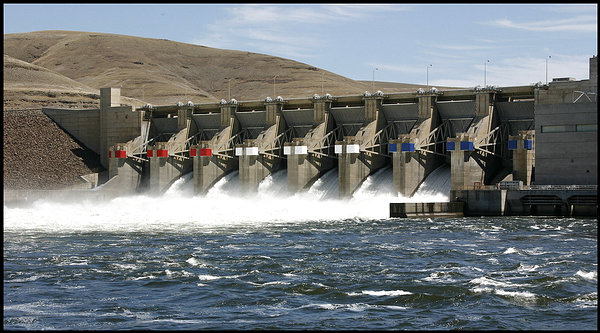 A motion by conservation groups and the State of Oregon asking U.S. District Judge Michael Simon to order increased spill at eight federal dams next spring would risk more unplanned blackouts and likely increase rates throughout the Northwest, energy industry experts and advocates say.
If granted, the biggest problems with reliability would likely come in the spring, when the potential spill increases would be at their highest, and in winter, when Columbia Basin flows are at their lowest.
Randy Hardy, principal of Hardy Energy Consulting and former administrator of the Bonneville Power Administration, said the Federal Columbia River Power System (FCRPS) has already lost 25 percent of its firm generating capacity since the early 1980s in average water years and 40 percent in low water years.
If ordered by Simon, these further constraints on the hydro system would come at a time when the region is already facing a potential energy deficit of 9 GW by 2030, according to a recent E3 study.
"I have serious concerns about this [request for injunctive relief]," Hardy told NW Fishletter.
Steve Kerns, who retired in 2020 as BPA's director of grid modernization, is also worried about reliability of the grid -- not only in the Northwest but throughout the entire West Coast -- if the injunctive relief is granted as requested. "There will be reliability impacts. We just don't know the extent," he told NW Fishletter.
Kerns -- who was involved in and eventually oversaw all planning and operations of the FCRPS for BPA -- predicted the biggest impacts would be in the spring, when the injunctive relief calls for spilling to 125-percent total dissolved gas for 24 hours a day.
He noted that there is usually plenty of energy in the Northwest during spring runoff, but the Columbia River runoff has been below average in three of the last five years, and some years June has brought unprecedented heat waves.
Kerns said it's unclear whether the "small" amount of spill that the injunction requests from September through March would have a significant impact to winter reliability -- but it could, depending on how much spill occurs.
The loss of zero-generation operations could also be significant, he said. When he was at BPA, Kern said, zero generation was used only in the winter. Bonneville would shut down flows for a few hours at night to store more water that could be used to generate power in the daytime, during heavy loads.
"It's not a routine [operation]," he said, but only used during cold snaps when the need for heavy load was predicted.
Another request in the injunction seeks to prohibit the U.S. Army Corps of Engineers from carrying additional power reserves at the expense of spill.
Kerns said there are a couple of reserves that BPA must adhere to. Continuous reserve is a generator's responsibility to carry an amount of reserve energy to maintain constant grid frequency and balance fluctuations that occur during normal operations.
"If Grand Coulee [Dam] loses 500 MW, another generator has to pick that up," he said. "The cause of not carrying reserves in spill means you have to carry more at Grand Coulee and Chief Joseph [dams], which could have reliability impacts if they don't have the ability to carry those reserves," he said.
In general, Kerns said, less generation from the FCRPS will result in reliability issues, and probably the cost of power to preference customers. "We' just don't know the extent," he said.
The output from the FCRPS has been dropping since the 1980s.
Hardy said that in the early 1980s, BPA based its firm capacity on four critical water years in the late 1920s and early 1930s. The FCRPS then provided 8.5 GW in low water years and 10 GW in average flow years.
"Fast forward to today and Bonneville is ready to offer 20-year contracts to all of its power customers as of the first of the year, and the average of the system today is 7 GW," he said. BPA will offer the contracts later this year, but they won't go into effect until October 2028.
Since the 1.2-GW Columbia Generating Station came on line in the mid-1980s, the firm capacity from the hydro portion of the FCRPS is now roughly 6 GW, he said.
Hardy said if the spill operations proposed in the lawsuit are similar to the high-spill alternative in the CRSO environmental impact statement (EIS), the region would stand to lose another 1,300 aMW under average water conditions, and 870 aMW in low-flow years from the spill proposal alone.
However, he noted, injunctive relief does not seek continuous spill through the summer. BPA will likely be analyzing those impacts, he said.
"Given the considerable amount of uncertainty associated with the exact impact of the fisheries motion, it is unfortunate that the administration has prevented Bonneville from releasing any information about their analysis of the impacts," Hardy said.
"It is really, really important that the region understands what the impacts of this [injunctive motion] are, and the sooner the better," he added.
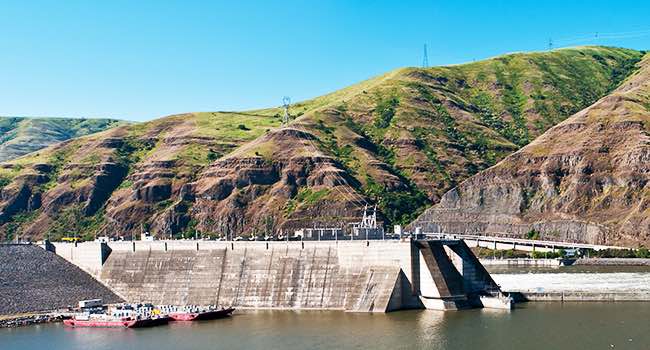 Oregon Gov. Tina Kotek, however, says the impacts to power generation are overstated.
"Protecting threatened salmon and steelhead stocks will necessitate operational changes within the hydropower system that have the potential to reduce power production at limited times of the year. Opponents to the [Resilient Columbia Basin Agreement] have continued to exaggerate impacts and defend the status quo," she said in an email to NW Fishletter.
She signaled a willingness to negotiate, however, saying that Oregon's goal is to protect salmon and steelhead while maintaining affordable and reliable energy from the federal hydropower system.
"My Administration is committed to working with regional partners, neighboring states, sovereign tribal nations and our federal government to navigate our present challenges and implement a solution that benefits fish and community energy needs," she said.
Oregon and conservation groups say the return to court was necessary after the Trump administration pulled out of a carefully crafted settlement and offered no alternative plan to restore salmon and steelhead in the Columbia Basin.
"Salmon and steelhead trout are keystone species that support the ecological, cultural, and economic health of the Pacific Northwest," the governor's office said in an email.
Earthjustice, the legal firm representing the 10 nonprofit conservation plaintiffs, said the changes are needed to boost salmon returns.
"The requested operational changes are science-based measures recommended by state and tribal fishery managers that change operations of the current Columbia Basin hydropower system to improve salmon survival as they migrate past dams and reservoirs in the Columbia and Snake Rivers. These changes include increased 'spill,' which allows juvenile fish to pass over the dams instead of through lethal turbines, and lowered reservoir elevations, which decreases the time salmon spend migrating through stagnant, overheated waters," the Earthjustice news release says.
Hardy isn't the only person in the energy industry raising alarms about the injunction request, filed Oct. 14 in the U.S. District Court for the District of Oregon.
Scott Simms, CEO and executive director of the Public Power Council, told NW Fishletter that since the 2020 CRSO EIS, the supply picture has only gotten worse.
"I think that can't be underscored enough. Nothing's been built, and we're also consuming more," he said, adding, "I think we're going to run into trouble if this injunction request is granted."
Simms said it's difficult to accept that the plaintiffs' request is an emergency, especially given the increasing numbers of salmon returning to the Columbia Basin, and the expanded fishing seasons that have been allowed by Washington and Oregon. "It just doesn't add up," he said.
Clark Mather, executive director of Northwest RiverPartners, said the court motion also threatens affordability of electricity in the Northwest.
"Between 2022 and 2023, retail electric rates climbed 11 percent in Oregon. Washington residential rates jumped 12.6 percent between May 2024 and May 2025," RiverPartners said in a news release.
The injunction would cause another spike in electric bills, Mather told NW Fishletter.
"People are struggling to pay their bills, and we have choices about the future of our hydro system," he said. "We think there are lots of solutions to keep [electricity] affordable while providing clean and reliable energy and continuing the progress we've seen on salmon recovery in the region."
If the requested injunction results in conditions similar to those of the high-spill alternative analyzed in the 2020 CRSO EIS, replacing the lost hydropower generation with natural gas turbines would cost $242 million annually. Replacing the power with variable renewable resources could cost an estimated $578 million a year and increase wholesale power rates by between 23 and 25.3 percent, according to the EIS.
In addition to public-power interests, groups representing major Columbia Basin irrigators, barge operators and the cruise boat industry also talked to NW Fishletter about the potential impacts of the proposed injunctive relief.
The Inland Ports and Navigation Group said the proposed injunction would add to the costs of transporting agricultural goods and threaten the safety of barge operators and passengers in cruise vessels.
It would also force some of the freight currently barged in the Snake and Columbia rivers to be transported by train or semitruck, increasing greenhouse gas emissions, the group said.
"We cannot afford risking safety to life, pitting fish against farmers or the climate against transportation" IPNG Co-chair Patrick Harbison, said in a news release.
Neil Maunu, executive director of the Pacific Northwest Waterways Association, told NW Fishletter that increasing spill creates unpredictable river conditions at the dam locks.
He said depending on the spill pattern, high spill can create turbulence or eddies that push vessels into rocks. "Couple that with wind and you get unsafe conditions," he told NW Fishletter.
He said recent high-spill operations have caused some unsafe conditions for vessel operators.
Under the proposed spill operations, "There's no question that safety will be compromised, and we can't allow that to happen," he said.
Darryll Olsen, board representative for the Columbia-Snake River Irrigators Association, told NW Fishletter that roughly 300,000 acres of irrigated land would be affected by the proposed injunction.
The proposal would drop McNary and John Day pools by 5 feet, and few of the irrigation pump stations are designed to operate under such a drastic change in pool elevation.
He said if the reservoirs are lowered, irrigators would have to extend pipelines, add screens and keep them clean, lower pumps, and deal with debris. In some cases, irrigators wouldn't be able to access their water rights, since the river would be half a mile or more away.
Generally, he said, there would be a range of impacts. "It goes from a new problem to deal with to you can't do anything. We haven't sat down and pulled all that together yet," Olsen said.
In an estimate, Olsen said that capital costs to continue irrigating from John Day and McNary pools would be roughly $100 million, plus annual operating and maintenance costs of least $10 million.
He lamented the turn of events that brought the issue back to court.
"The relative stability of the litigation settlement agreement has been undermined by the Trump administration's actions, with some river industries cheerleading, and the region is now dealing with a provoked preliminary injunction with real-time impacts for the power system and irrigators," he said, adding, "The situation is a profile of defendant miscalculations, and a highly implausible legal strategy, if any strategy actually exists."
Olsen said he hopes to sit down with the plaintiffs and discuss the potential for allowing minimum irrigating pools instead of minimum operating pools, which would make a big difference for irrigators.
Hardy said going back to the original settlement agreement from December 2023 would be the most reasonable path forward for all.
"We had peace in the valley and the perspective to work some of this out over time," Hardy said, referring to the agreement rescinded by the Trump administration.
"My recommendation for what the judge should do is order all the parties -- including the Trump administration -- back to the table to reengage in their original settlement agreement rather than taking another huge chunk out of the hydro system," he said.
learn more on topics covered in the film
see the video
read the script
learn the songs
discussion forum