forum
library
tutorial
contact
New ISAB Report a
'Call to Action' on Climate Change
by K.C. Mehaffey
NW Fishletter, December 10, 2025
|
the film forum library tutorial contact |
|
New ISAB Report a
by K.C. Mehaffey
|
"We've got to start prioritizing things, and
helping people understand what the tradeoffs are"
-- Desiree Tullos, chair of Independent Science Advisory Board (ISAB)
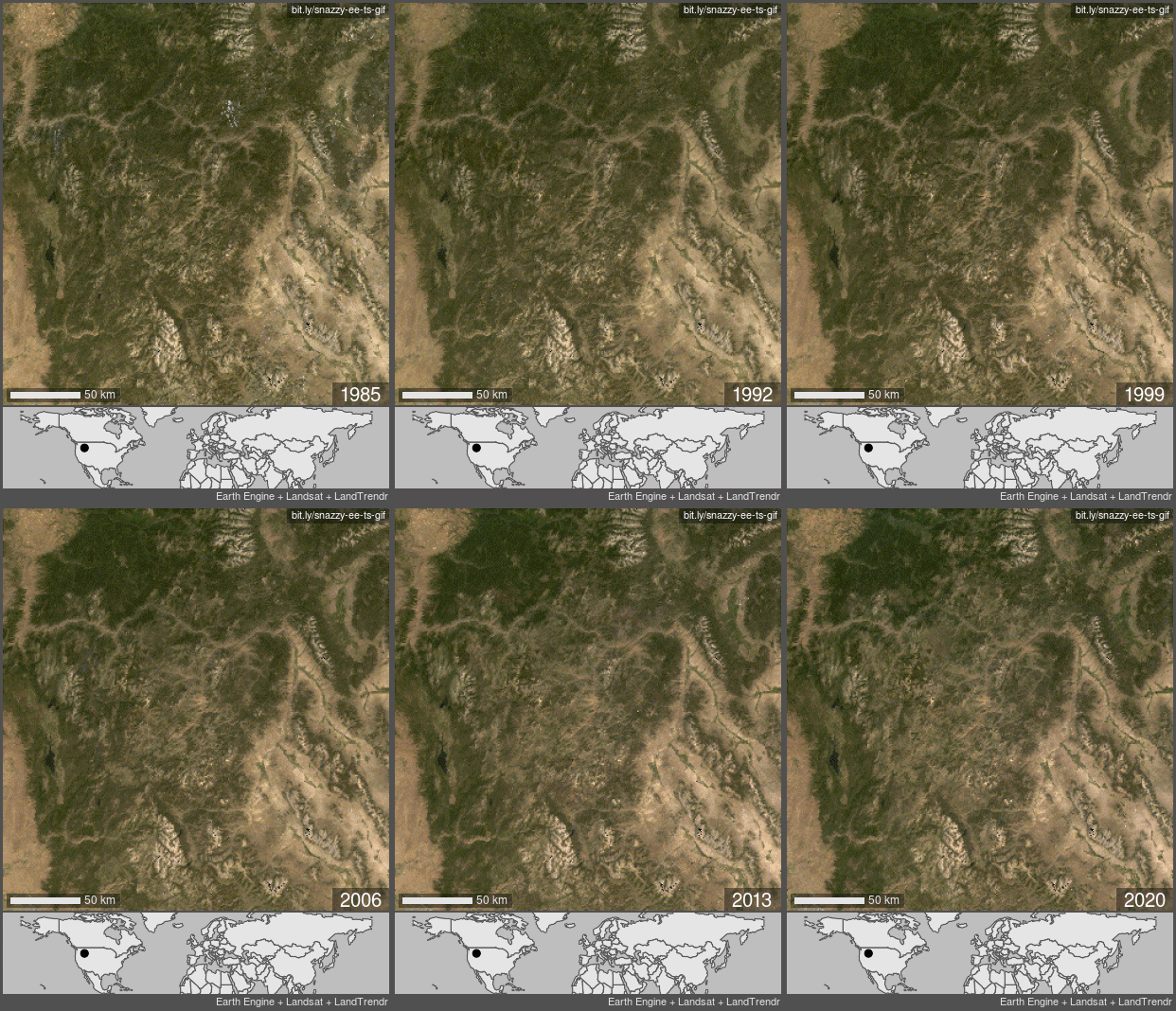 The average air and water temperatures in the Columbia Basin have increased over the past two decades, with temperature changes more dramatic in the interior and coastal areas experiencing more frequent marine heat waves.
These and other climate changes are negatively impacting salmon and steelhead, according to a new report by the Independent Scientific Advisory Board.
But rather than simply updating information in the ISAB's first climate report from 2007, the new report is "a call to action to go beyond the data" on climate change, according to Desiree Tullos, ISAB chair and a professor at Oregon State University's Biological and Ecological Engineering Department.
The report details the impacts of climate change on salmon restoration, synthesizes relevant work being done to address those impacts, and offers seven recommendations that provide universal strategies for creating climate resiliency.
"Some of what we were trying to point to with these recommendations is the need to get beyond that clinical data reporting of, 'it's getting warmer,' and say some hard truths, like, we've got to get the public involved. We can't continue to do this on our own in our silo as restoration practitioners," Tullos told NW Fishletter.
"We've got to start prioritizing things, and helping people understand what the tradeoffs are," she continued. "The public has to be part of this conversation, because it's going to include things like prioritizing places and organisms."
The independent scientists who serve on the ISAB dove into dozens of studies since 2007 on the impacts of climate change on salmon. They hosted presentations by numerous Columbia Basin Native American tribes, state and federal agencies, and nonprofit groups that have incorporated climate resilience into their salmon recovery projects.
They discovered that many small actions -- some quite innovative and important -- are happening across the basin to address the impacts of a warming climate, Tullos said. But these efforts aren't widely known, even though they would be relevant in other parts of the basin. "A lot of folks know they need to address climate change, but they don't know how to," she said.
The report emphasizes the leadership by Columbia Basin tribes in climate resilience assessment and planning. "It's something we recognize is happening across the basin -- and it's happening in other river basins as well. The tribes really have taken on a leadership role, and probably in a vacuum," Tullos said.
The report can serve as a guide to others who are trying to restore salmon under changing conditions. It's not just relevant for restoration work in the Columbia Basin, but also for researchers, the public, and people doing restoration work outside the basin, she noted.
The ISAB did include the data, revisiting the ISAB's 2007 report on climate change, which noted that 11 of the previous 12 years ranked among the 12 warmest years on record, and that the Pacific Northwest had already warmed about 1 degree Celsius (1.8 degrees Fahrenheit) since 1900 -- 50 percent more than the global average.
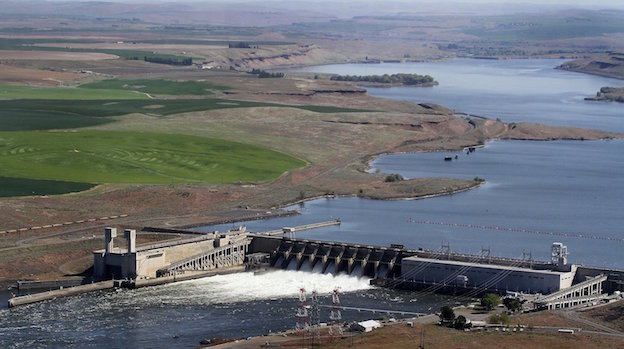 The new report notes that in addition to the continuation of rising air temperatures, average water temperatures in the Columbia Basin have increased by between 1 and 1.5 C (1.8 and 2.7 F) since the 1970s.
Tullos said that in 2007, ISAB members understood the implications of climate change, but there was still uncertainty around the pace of rising temperatures.
For example, a graph in the new report shows a range of increasing temperatures, based on the level of continued carbon emission.
In the graph, temperatures that weren't expected until 2050 were already realized with the extreme heat in 2015, Tullos noted.
"What we are finding, and I think maybe did surprise us a little bit, is we do have these moments, these extreme events, that jump us farther into the future than we thought we would be at this point. And then we go back to the curve and then we jump back to the future again," Tullos said, adding, "Those individual events can be quite disruptive to the ecosystem, and I think that's a key point that the last twenty or so years has really emphasized to us."
The report notes that climate change will amplify other impacts to fish and wildlife from other sources, "including overfishing, habitat fragmentation and degradation, hydrosystem operations, and spread of non-native species ... It is another anthropogenic disruption to the ecosystem that warrants robust restoration and protection efforts integrated with other ongoing efforts."
Tullos said the report's seventh recommendation is a call to action. It states that while knowledge gaps exist, the current science supports immediate action.
Tullos acknowledged that this recommendation speaks to the urgency of acting now and also to the scientific tendency to continue to explore the unknown, which sometimes leads to inaction.
"With that recommendation, we were really wanting to avoid the perception that we don't know enough. I think in science, there's a lot of hesitation. We want to nuance everything and caveat everything because we see a lot of the uncertainties," Tullos said.
She added, "Yes, there are still some gaps but they're kind of on the margins now. The next big steps are already available. We don't need to wait another 25 years for science to keep grinding away at these small but important gaps. There is enough. We don't need to keep waiting."
- Recommendation 1: Strategic and transparent prioritization of actions that includes consideration of intersecting stressors is important at the outset of project planning.
- Recommendation 2: Maintaining and enhancing physical habitat and species' life history diversity are priorities for increasing climate resilience.
- Recommendation 3. Climate-resilient habitats may require more lateral space, dynamism, and better monitoring.
- Recommendation 4. Policy and regulations need to be adaptable and collaborative to integrate emerging science.
- Recommendation 5. Considering reciprocity of actions through a Tribal ecological and cultural framework will promote climate resiliency.
- Recommendation 6. Engaging a broader public constituency will increase the scale and benefit of projects.
The need for scientists to effectively communicate with the public through storytelling is more important than ever. Win-win restoration projects are common and result from cooperation among many groups: landowners, funding agencies, recreators, regulators, advocates, and others. These success stories need to be shared within and beyond the river mitigation and restoration community. Furthermore, scientists could better communicate about the uncertain future and risk minimization at a project site with regulators and the public. This takes time and strategic communications, but it allows for bigger projects and greater collective benefits.
(A public constituency refers to the body of citizens in a specific geographical area who elect a representative (e.g. council member) to a legislative body, making them a fundamental part of democratic systems for ensuring representation of local or group interests, encompassing voters in electoral districts, interest groups, or organized bases for power. The term also highlights the dynamic relationship where elected officials serve the needs of these constituents, balancing immediate demands with long-term public welfare.)
- Recommendation 7. While some knowledge gaps exist, the current scientific foundation supports taking immediate action toward more climate-resilient restoration.
learn more on topics covered in the film
see the video
read the script
learn the songs
discussion forum