forum
library
tutorial
contact

Dam Advocates Respond to Groups'
Bid to Lift Salmon Litigation Pause
by Matthew Weaver
Capital Press, September 13, 2025
|
the film forum library tutorial contact |
|
Dam Advocates Respond to Groups'
by Matthew Weaver
|
"We believe that the science and data are on our side --
salmon and the Lower Snake River dams can and do co-exist..."
-- Michelle Hennings, Washington Association of Wheat Growers
 Dam advocates anticipated environmental and recreation groups' new motion asking a U.S. District Court judge in Oregon to lift a pause on litigation over endangered salmon and steelhead, the latest in the ongoing controversy surrounding the four lower Snake River dams.
"I think this was predictable, obviously, once (President Trump) undid the Biden administration's secret deal," said Todd Myers, vice president for research with the Washington Policy Center, an independent, non-profit think tank based in Seattle.
The Biden administration in December 2023 entered an agreement with the states of Oregon and Washington; the Nez Perce Tribe; the Confederated Tribes and Bands of the Yakama Nation; the Confederated Tribes of the Umatilla Indian Reservation; the Confederated Tribes of the Warm Springs Reservation and several environmental non-government organizations.
The agreement included more than $1 billion in new federal investments in wild fish restoration over the next decade and an "unprecedented" 10-year break from decades-long litigation against the federal government's operation of its dams in the Pacific Northwest. Many agricultural and dam advocates felt shut out and ignored during the negotiating process.
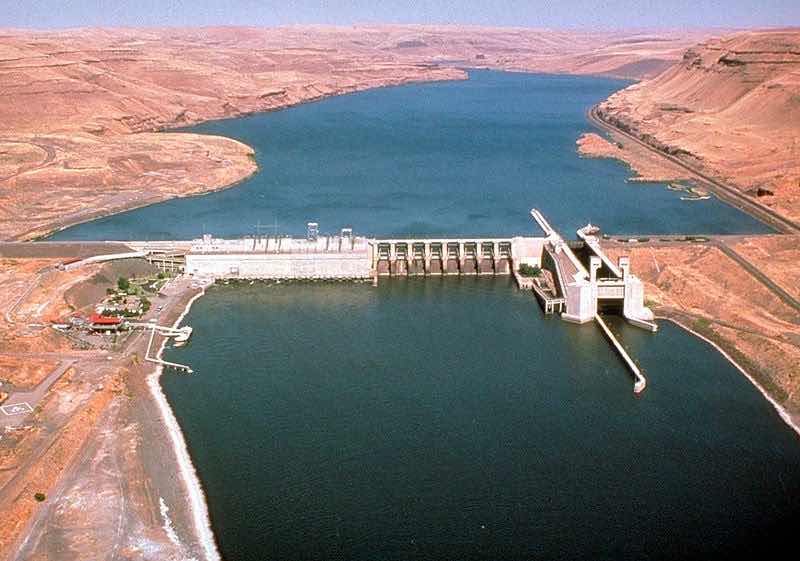
The agreement was viewed as a pathway to breaching the four lower Snake River dams -- Ice Harbor, Lower Monumental, Little Goose and Lower Granite dams.
Trump revoked the agreement in June. The groups filed the new motion Sept. 11.
"They should be careful what they ask for, because the last time they sued to create an environmental impact statement, (the federal government) came back and said the dams shouldn't be replaced, and the salmon could recover with the dams in place," Myers said. "So their record on trying to get the science result they want through lawsuits has been poor on this."
"We believe that the science and data are on our side -- salmon and the Lower Snake River dams can and do co-exist in a way in which there are healthy salmon populations, and the dams provide critical benefits to those in the Pacific Northwest and beyond," said Michelle Hennings, executive director of the Washington Association of Wheat Growers. "As we always have, we continue to stand ready to work with all PNW stakeholders to support science-based solutions to ensure a continued thriving salmon population while dams remain intact."
 "I believe there are options besides just throwing in the towel and going back to court, and that the region is counting on us to try," said Scott Simms, president and CEO of the Public Power Council. "Since the rescinding of the agreement earlier this summer, we in public power have been keenly interested in sitting down with the plaintiffs to discuss the options going forward. We have publicly stated so, but we have been met largely with silence."
'A long way to go'
Four years ago, various environmental groups predicted wild spring and summer chinook salmon would be "quasi-extinct" by 2025, Myers said. He points to data that current total returns are 50% higher than 2021.
"That doesn't mean we're in good shape, we still have a long way to go to recovery -- I think everybody agrees on that," Myers said. "Their record on being able to accurately predict the health of salmon runs has been very poor, so now they're trying their luck in court, as opposed to science and the real world." In December, the Northwest Power Council reported a 10-year rolling average of 2.3 million adult salmon and steelhead returning to the basin, an improvement from an average of 1.3 million fish in the 1990s, but below the annual goal of 5 million fish returning. How likely is the pause to be lifted?
"I'm not a lawyer, so I don't know, so I don't make those guesses," Myers said. "There are court decisions I agree with and court decisions I don't."
'Let's take the hard path'
All groups need to determine the best method to increase salmon populations, Myers said.
Tribes and environmental groups argue that the dams are the primary source of mortality for the endangered fish. Agricultural and hydropower advocates disagree, citing ocean conditions as an unknown factor and point to negative effects of removing the dams, including the loss of barge navigation and increased electricity costs. Myers called for decisions that "aren't so black and white" and allow for "energy and salmon." He suggests reducing predation of the salmon by seals, sea lions and birds.
"That's a thing that we can do that costs very little," he said, pointing to data from the Washington Academy of Sciences that suggest it could have a big impact. "So let's do that before we destroy dams that generate a ton of electricity. Let's do some additional things to see if we can make good progress."
"To simply return to court is in some ways the easy option," Simms said. "Let's take the hard path of rolling up our sleeves to work out a plan in the region, for the region. The Public Power Council and our non-profit, community-owned utilities are making that offer. The question is, Gov. Kotek and other parties, do you accept it?"
learn more on topics covered in the film
see the video
read the script
learn the songs
discussion forum